By Martha Asinguza
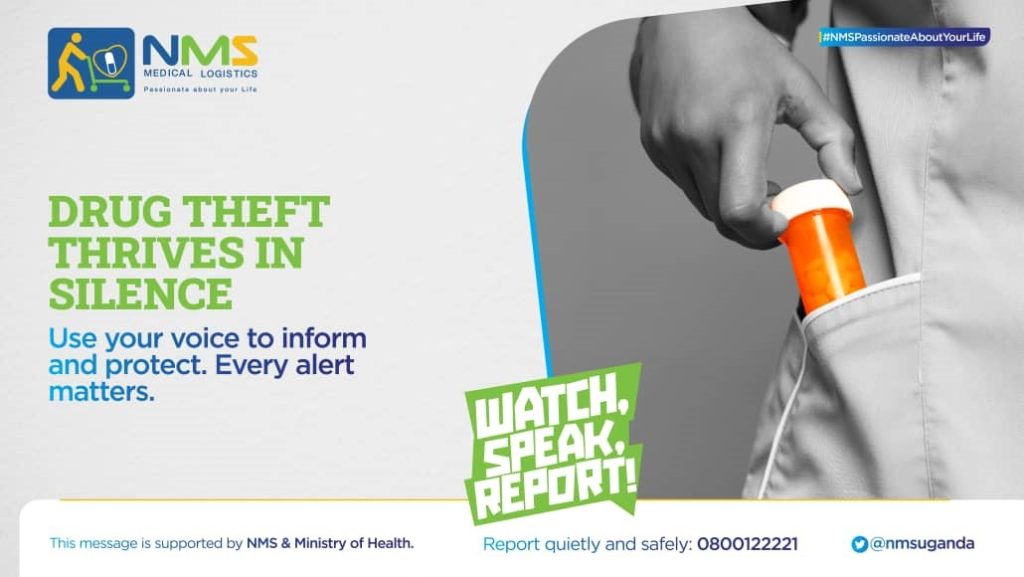
Theft of government-supplied medicines is not merely a logistical glitch—it is a betrayal of public trust and a direct assault on the dignity of Ugandans who depend on the public health system.
Uganda’s National Medical Stores (NMS) has made notable progress through its Last-Mile Delivery reforms, ensuring drugs reach even the remotest health centres. Yet, stockouts, informal charges, and diversions continue to plague patients at the point of use. This is not a challenge that one institution alone can solve.

Doctors, nurses, pharmacists, and storekeepers are critical players. Their prescribing patterns, accountability in handling stock, and ethical standards determine whether medicines are available to patients or lost to theft. Responsible prescribing and accurate documentation must be enforced, and health workers should be emboldened to expose malpractice within their own ranks.
Equally important is oversight. District Health Officers, Members of Parliament, and Resident District Commissioners must provide transparent monitoring of drug deliveries.
Community barazas and public audits should become routine. Without consistent scrutiny, corruption thrives unchecked.
Law enforcement must also take the issue seriously. Drug theft is not a minor workplace lapse; it is a crime with grave consequences. Investigations must be thorough, and courts must deliver timely justice to deter offenders.
Citizens, too, cannot remain passive. They must demand accountability by reporting cases of drugs marked “Government of Uganda – Not for Sale” found in private clinics or open markets. No mother should be asked to pay for a Mama Kit intended to be free.
The battle against drug theft is about shared responsibility. Uganda needs a united front where professionals, leaders, and communities act together to protect the medicines our nation has already paid for.
Only then can the health system earn back the trust it needs to serve all citizens.
The writer is a student at Makerere University.