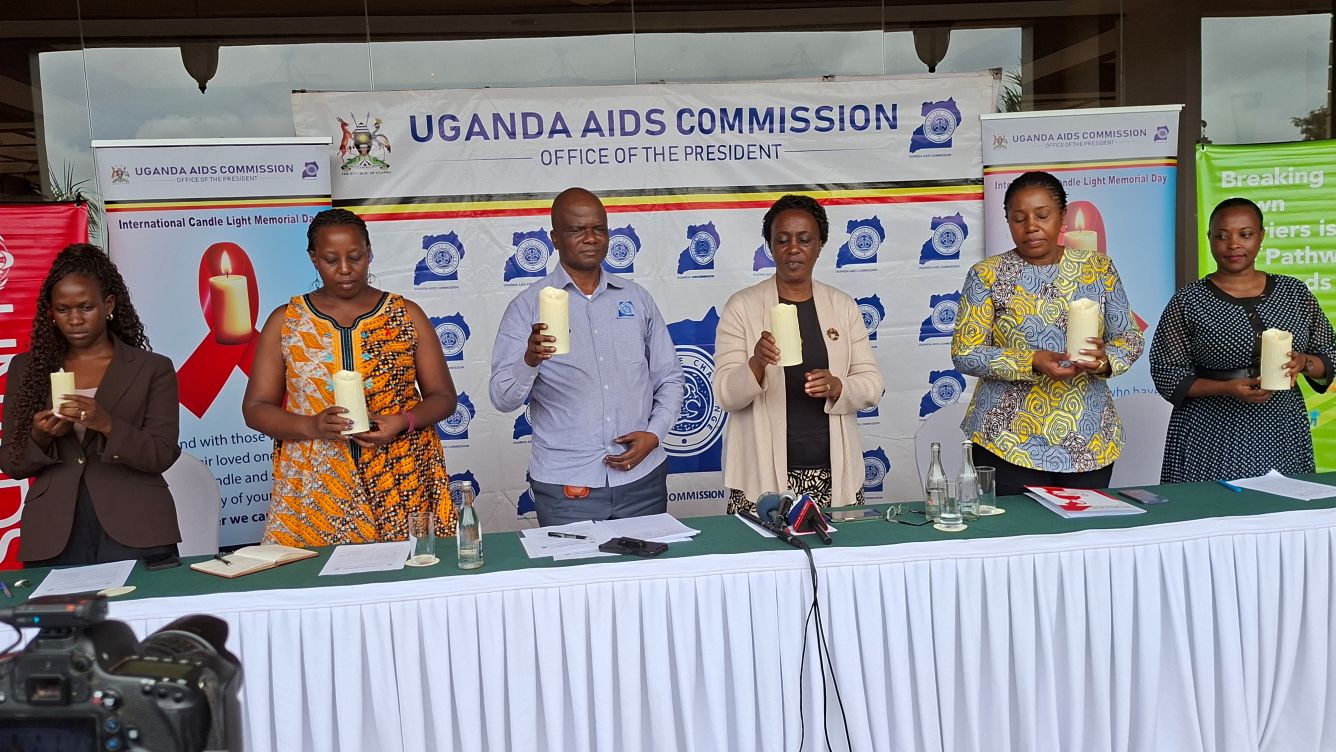
The Uganda AIDS Commission (UAC) has urged for the empowerment of women who carry a higher burden of infection as a strong pillar in the fight against HIV/AIDS, if the country is to reach it’s goal to end HIV/AIDS as a public threat across the country, by 2030.
The Director General UAC Dr. Nelson Musoba said women, who are disproportionately affected by HIV, are vital change agents in bringing it to an end.
“We know that women, especially adolescent girls and young women, are still being disproportionately affected by HIV and yet, we know that women are our greatest agents of change, they are the ones driving the uptake of prevention services, leading community-based and faith responses and have been central to the success of our prevention of mother-to-child programmes” he said.
He added, “If we are to end AIDS as a public health threat by 2030, we’ve been emphasising that there are factors that make women have higher prevalence but we need to move from viewing women as vulnerable, to empowering them as leaders of the response, making sure that those factors that are bottlenecks, are all removed so that they are not mere participants, but they are in leadership” he said.
Dr Musoba made the remarks while addressing media at the launch of the Candlelight Memorial Day, 2026 themed, “Ending AIDS by 2030: Embracing the Role of Women”, that will be held at Kitante Hill Secondary School grounds next month, on Tuesday in Wakiso district.
“Currently we are registering about 37,000 new infections every year, that is close to between 700 to 800 infections that are happening every week and this is disproportionately affecting young people, especially between the age of 15 to 24”he said.
He added, “They account for the majority of the infections, the women specifically, carry a higher burden of infection but men also continue to lag behind in accessing treatment, leading to higher mortality”.
Dr Musoba said Uganda has made progress in the fight against HIV/AIDs with the current national HIV prevalence among adults at 4.9 percent and new infections declining by 69 percent since 2010, however a more united approach is key if the country is to maintain a decrease in the number of AID’s fatalities which dropped from 56,000 in 2010 to about 20,000 annually.
Dr Musoba further called for an end to stigma towards victims and criticised stakeholders for keeping silent certain issues pertaining the epidemic.
“It’s a moment of solidarity to stand with those who have lost their loved ones, it’s also a platform to confront stigma, confront silence, because we know that even after four decades of fighting epidemic, we still have unbelievably high rates of stigma” he said.
The Joint United Nations Programme on HIV/AIDS (UNAIDS) Country Director Ms Jacqueline Makokha, said women’s leadership and community-led responses, should remind the public that ending AIDS isn’t only a responsibility of those most affected, but also those who are empowered and mobilised at community level.
“The UNAIDS Global Update of 2025 shows that our region, eastern and southern Africa, remains the epicentre of the epidemic, accounting for nearly half of global HIV infections. In sub-Saharan Africa, 63 percent of new infections in 2024 were among women and girls, with 4,000 adolescent girls and young women infected every week” she said.
She added, “Here in Uganda, the Ministry of Health tells us that in 2024 we had 100 new infections per day, however, Uganda has made significant strides in reducing overall HIV incidence and expanding access to HIV treatment”.
Ms Makokha said additional progress has been witnessed in the decline of mother to child transmission of HIV.
“Despite progress in eliminating mother-to-child transmission of HIV, children are still acquiring HIV today, new child infections continue to occur because too many women fall through the cracks during pregnancy, breastfeeding, or after delivery. Stigma, fear of disclosure, poverty, violence, and weak support systems still force mothers out of care” she said.
Urged government to adopt the 2026 to 2031 global AIDS strategy, which calls for community-led and women-centred approaches in the fight against AIDS.
Ms Maery Mungati the Chief Executive Officer, Village Journeys Africa said there is need to provide information to people through a community based led approach, by ensuring information on HIV/AIDs reaches the most vulnerable populations.
“We are going to nine cities around the country include Jinja, Mbale, Soroti, Gulu, Arua, Fort portal, Hoima, Mbarara, and Masaka, to the marketplaces where quite a number of women are working and don’t have time to go to the health centres for services, so we are taking services to them” she said.
The Board Chairperson UAC Dr. Ruth Ssenyonyi said the burden of HIV is still evident in the communities and if not tackled, poses a bigger threat of losing the gains so far made in the national HIV response.
“HIV has a higher prevalence in women which is 6.4 percent compared to the men 3.4 percent, many of the drivers for new infections are disproportionately affecting women through income inequality, early child marriages, bad culture practises, widow inheritance to mention but a few” she said.
Dr Ssenyonyi said it is paramount that the female leaders are empowered to advocate against the negative cultural, political and social behaviours that are imposed on women and the girl child.
“Women are the authors of life and therefore should be at the forefront of this gallant fight” she said.