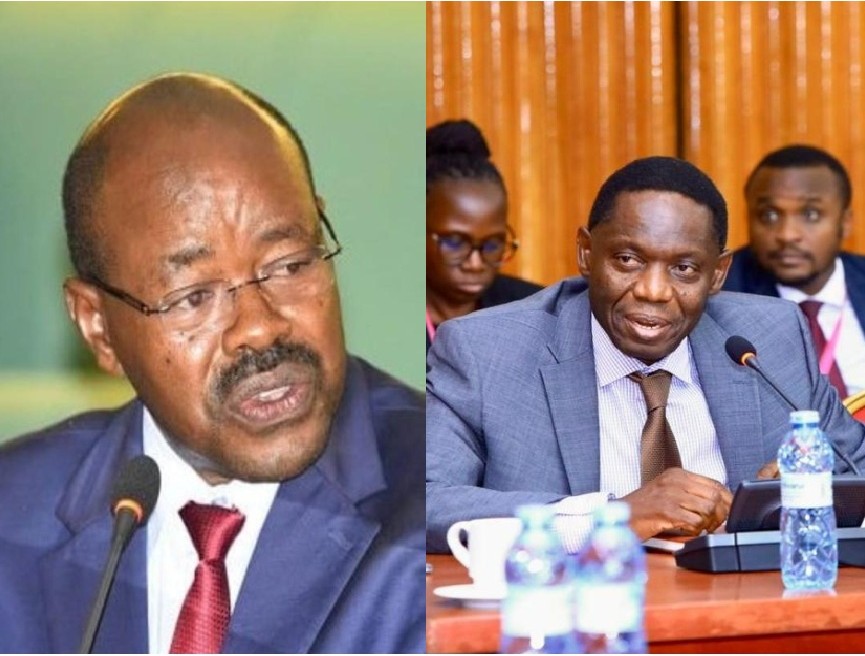
As consultations continue on the proposed controversial Sovereignty Bill 2026, the Ministry of Finance has backed the bill, hours after the Bank of Uganda Governor warned that the bill will disrupt the country’s financial stability.
While appearing before the Joint Committee on Defence and Internal Affairs and Legal and Parliamentary Affairs on Tuesday, the Governor of the Bank of Uganda, Michael Atingi-Ego, warned that the proposed Protection of Sovereignty Bill 2026, could disrupt the country’s financial stability, restrict foreign investment, remittances and further undermine the country’s long-term economic ambitions.
Atingi said the Bill also risks creating parallel oversight that could undermine the constitutional independence of the central bank.
“Chairman, a country without reserves is not sovereign. The potential of this Bill to destabilize Uganda’s balance of payments is our primary concern as a central bank. For example, last financial year the overall balance of payment surplus was USD 1.5 billion That’s how we were able to increase our reserve coverage by USD 1.5 billion” he said.
Atingi further warned that classifying such inflows as “foreign agency” could disrupt household incomes and weaken foreign exchange liquidity, placing pressure on the shilling.
“Today as we speak our reserves are close to USD 6 billion. Why? Because these inflows have been coming in. The moment you tamper with these inflows here, we risk running down our reserves, and that is economic disaster for a country” he said.
However the State Minister for Finance Amos Lugoloobi, has in a Certificate of Financial Implications submitted to Parliament, said the bill will strengthen national control by regulating foreign influence and aligning external financing with Uganda’s development priorities.
“The proposed Bill is expected to strengthen Uganda’s policy autonomy and national security architecture, improve coherence in the management of foreign aid and foreign-funded activities, and support stability in governance and public order” he said.
Minister Lugoloobi further noted that the bill is not anticipated to directly generate revenue to Government and is primarily intended to strengthen Uganda’s legal and institutional framework for the protection of sovereignty and related enforcement mechanisms.
“These outcomes are expected to contribute to a more secure environment for implementation of Government programmes and long-term national development” he said.
The two sister financial institutions split on the controversial bill comes after Bugweri County MP, Hon. Abdul Katuntu, on Tuesday confessed that Government had put the house in an “Ugly Position”, by not consulting stakeholders on the bill prior to tabling it before Parliament, and advised Bank of Uganda Officials to consult with the finance ministry on it’s stand.
“But as you go back, I think you need to engage your minister. You should have raised this issue in the cabinet. Other than you people coming here to the public and now you can see the sort of conversation we are having. Like government institutions seem not to agree, and that is quite ugly. Government institutions should be agreeing. So, by the time you bring a bill to us in Parliament, you should have agreed as government departments, agencies. There must have been enough consultation,” he said.
The controversial Bill has met stiff resistance from the World Bank, members of the opposition and civil society across the country.