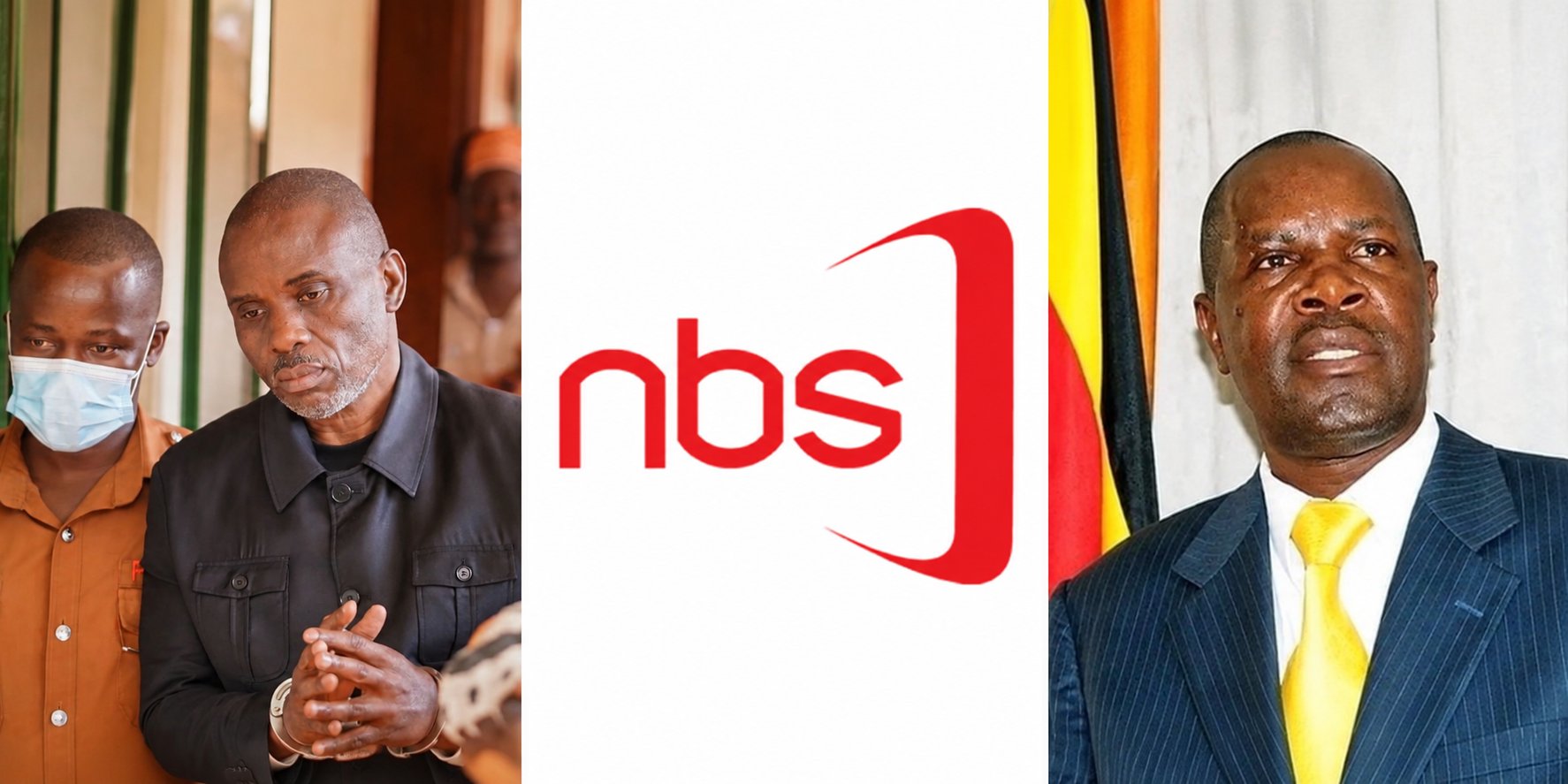
The Civil Division of the High Court has dismissed an assault case filed by former Kampala Lord Mayor Erias Lukwago, against the Member of Parliament for Elder persons Ofwono Opondo.
In a judgement dated May 11th 2026, Hon. Justice Bonny Isaac Teko, dismissed Lukwago’s application after court found insufficient evidence that Ofwono Opondo assaulted him, threatened him with a firearm, or unlawfully confined him during a televised debate on NBS TV.
“The Application is dismissed….The Applicant has failed to establish that the Respondent violated his rights under Articles 23, 24, and 44 of the Constitution of the Republic of Uganda” Justice Teko ruled.
The case stemmed from an application before the court by Lukwago stating that during an appearance on NBS TV’s Frontline talk show on July 28th 2022, Ofwono Opondo, then Director of the Uganda Media Centre and Government Spokesperson, who appeared as a fellow panellist on the show which was focused on the Soroti East Member of Parliament by-election, midway through the debate, rose from his seat, charged at him, threatened to evict him from the studio and in the presence of the show host and fellow panellists, physically attacked him.
Specifically Lukwago, said that Opondo pushed his hand into his pocket and around his waist in a manner suggestive of drawing of a pistol, thereafter grabbed him by his jacket pulling him from his chair, punched him in the chest, and kicked him in the stomach.
Lukwago further noted that following the physical altercation, Opondo continued making threats to finish him off in the corridors of the television station or outside thereof, causing the management of NBS Television to confine Lukwago to a room away from Opondo until police arrived at approximately 1:00 am and escorted him home.
However in an affidavit, Opondo categorically denied the allegations, noting that he was a regular panellist on the show and contended that it was Lukwago who was aggressive and disruptive from the outset of the programme, repeatedly interrupting him during his allotted segments and making inflammatory accusations, including falsely accusing him of having previously shot someone.
Opondo further denied punching, kicking, or physically assaulting Lukwago in any manner, and further denied that he had a pistol or made any suggestion of drawing one.
As regards the alleged restraint, Opondo denied having issued any instruction to any person to prevent Lukwago from leaving the NBS Television premises, and asserted that he is neither a police officer nor a member of the NBS management and therefore lacked any authority or capacity to restrain Lukwago.
While passing the ruling, Justice Teko noted that Lukwago failed to prove, on the balance of probabilities, that the events complained of amounted to torture or any constitutional violation of human rights.
“The evidence on record disclosed, at most, an altercation whose circumstances remained insufficiently established. Notably, the Applicant withdrew NBS Television from the suit, yet the station would have been a critical and independent source of evidence regarding the incident” he said.
Justice Teko further noted that no testimony was called from the other panelists present, no CCTV footage was tendered, and there was no cogent evidence demonstrating prolonged detention, deliberate cruelty, or severe physical or mental suffering necessary to meet the constitutional threshold for torture.
“The Court further observed that not every assault or confrontation rises to the level of torture, inhuman and cruel treatment which ordinarily involves intentional infliction of severe suffering, abuse of authority, coercion, intimidation, or punishment, commonly associated with detention or misuse of state power” he said.
Justice Teko further noted that in Lukwago’s case, there was no satisfactory proof that he was subjected to treatment intended to extract information, humiliate, terrorize, or inflict extreme suffering.
“Equally, the surrounding circumstances raised substantial doubt as to the nature of the incident, including the absence of evidence explaining why the Plaintiff was allegedly confined for security reasons, the unexplained delay by police officers to evacuate him till late in the night” he said.
In his judgement, Justice Teko reiterated that Lukwago failed to establish that the conduct complained of transcended an ordinary verbal altercation into Amin like torture as portrayed by Lukwago or any actionable violation of constitutional human rights.
Following dismissal of the case, Justice Teko further declined Lukwago’s prayers for declarations, compensation, general damages, exemplary damages, punitive damages, and a public apology.

He further noted that each party will bear it’s own costs.