President Yoweri Museveni has named Uganda’s crude oil, the Pearl Sweet Petroleum, reaffirming that Uganda’s oil resources must be used to build a productive and sustainable economy, rather than repeat mistakes made by some African oil-producing countries.
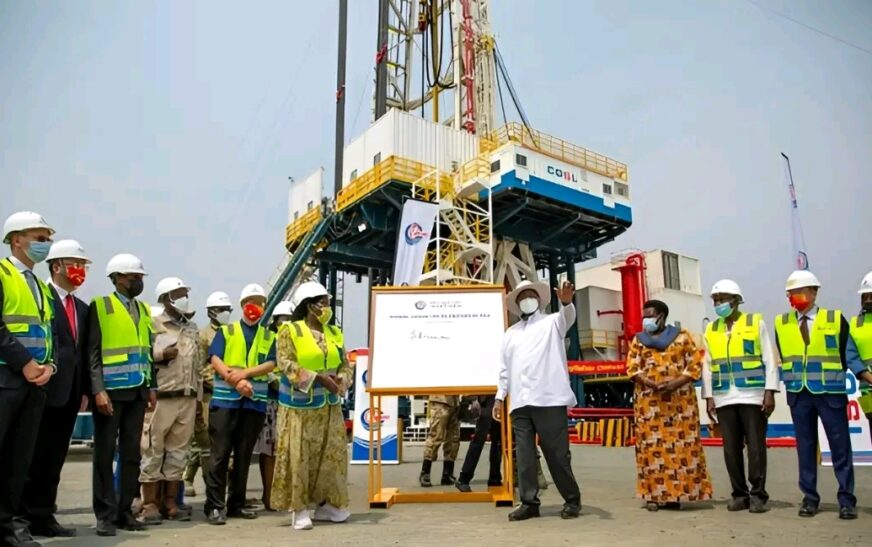
“We are here to celebrate and give this baby (oil) a name. These people have told me to name this baby Pearl Sweet Petroleum” he said.
He added, “We call it sweet because it does not have sulphur. When it has sulphur, it is more expensive to remove the sulphur. This one either has little or no sulphur”.
Museveni made the remarks during the official naming ceremony for Uganda’s crude oil at the Kingfisher Development Area in Kikuube District, on Wednesday.
The event at Kingfisher marks another major step in Uganda’s transition from petroleum discovery and development to commercial production and the utilisation of oil and gas as a catalyst for wider economic transformation.
President Museveni emphasised the importance of an integrated approach to petroleum development, with the refinery, energy generation, industrialisation and human capital development forming part of the broader strategy.
He highlighted the decision to prioritise the development of an oil refinery in Uganda, noting that refining locally would reduce transportation and transit costs associated with exporting crude and subsequently importing petroleum products.
He said the refinery would also help reduce Uganda’s petroleum import bill, which he placed at about US$2 billion annually.

Museveni also noted the importance of utilising associated gas rather than flaring it. Gas from the Kingfisher development is expected to support power generation of about 80 megawatts, while other petroleum products will support cooking and other domestic uses. This approach, he noted, will generate economic value while protecting the environment.
He also commended the oil companies and Government institutions for working together to advance Uganda’s petroleum programme, stressing that the country must pursue development strategically and not blindly.
He said Uganda’s oil resources are finite and should therefore be used to create durable productive capacity that will benefit generations beyond the lifespan of the oil fields.
Future petroleum revenues, he explained, should support investments in power generation, transport infrastructure, railways, universities and other long-term national assets rather than increased consumption of imported luxury goods.
The President also highlighted the importance of continued exploration, noting that only part of Uganda’s petroleum potential has so far been developed.
He said the country still has significant exploration opportunities, including in other prospective areas, and that the objective should be to ensure that the first barrel of oil is not the last.