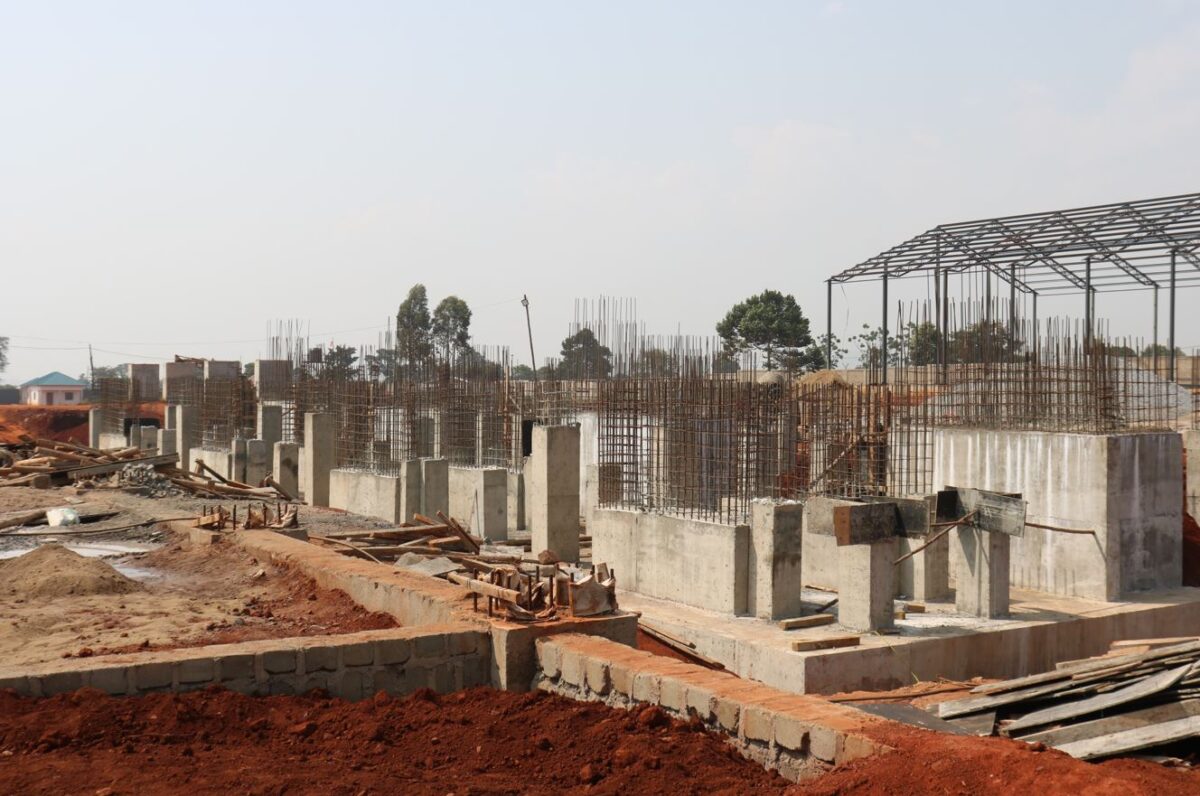
Prime Minister Robinah Nabbanja’s plan to commission the CN Sugar Limited factory in Namayingo on September 4, 2026, has raised fresh legal questions after the High Court previously ordered the company to halt operations until it obtained a valid licence.
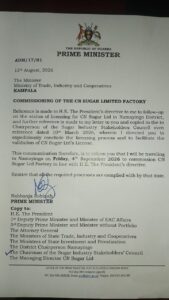
In a letter dated August 13, 2026, Nabbanja informed the Minister of Trade, Industry and Cooperatives that she would travel to Namayingo to commission the factory in line with a directive from President Museveni.
She directed the minister to ensure that all the required processes are completed before her visit.
The timing has raised eyebrows because CN’s fresh application for a sugar-mill licence has not yet been determined. The application is expected before the Sugar Industry Stakeholders Council on August 21—just days after the Prime Minister had already announced the commissioning date.
The question is therefore whether the regulatory process is being allowed to determine the fate of the factory or whether the political timetable has already predetermined the outcome.
The controversy dates back to a High Court ruling delivered on January 20, 2025, by Justice Douglas Singiza Karekona in a case brought by the Uganda Sugar Manufacturers Association.
The court found that previous permissions issued to CN Sugar by the Ministry of Trade, Industry and Cooperatives were unlawful because the ministry did not have the statutory authority to licence sugar mills.
Under the Sugar Act, the Uganda Sugar Board was responsible for licensing sugar mills.
The court consequently cancelled the purported licences and letters of no objection issued to CN and ordered the company to halt its sugar and jaggery mill operations until it was duly licensed by an authorised body. Uganda Sugar Manufacturers Association (USMA) Limited v Attorney General 3 Others 2025 UGHCCD 4 (20 January 2025).pdf
The court also ordered action concerning the location of CN’s factory, finding its establishment within the 25-kilometre radius of existing sugar and jaggery mills contrary to the government’s sugar policy. Uganda Sugar Manufacturers Association (USMA) Limited v Attorney General 3 Others 2025 UGHCCD 4 (20 January 2025).pdf
The judgment therefore established a clear legal sequence: CN must first obtain a valid licence before it can lawfully operate.
THE CANE AND RADIUS QUESTIONS
The original dispute was not simply about paperwork. Existing sugar manufacturers raised concerns that new factories were being established in areas where sugarcane supply was already limited.
The court examined Uganda’s sugar policy, which sought to create viable sugarcane-growing zones and regulate the location of factories to prevent excessive competition for cane.
The court found that CN and Shakti Sugar were within the restricted radius of existing mills and declared their establishment contrary to the government policy. Uganda Sugar Manufacturers Association (USMA) Limited v Attorney General 3 Others 2025 UGHCCD 4 (20 January 2025).pdf
CN has since returned to the licensing process with a fresh application. That application must now be considered under the current regulatory framework. But an application is not a licence.
PM NABANJA’s COMMISSIONING OF THE FACTORY
Nabbanja’s letter does not itself purport to grant CN a sugar licence. The legal problem is the timing.
By announcing that she will commission the factory before the licensing body has made its decision, the Prime Minister has created the appearance that the outcome is already expected to be positive.
What happens if the Council says CN has not satisfied the requirements? What happens if there is still inadequate cane?
What happens if the regulator finds that the location remains inconsistent with applicable zoning requirements? Will the September 4 commissioning be cancelled?
Those questions matter because the Prime Minister cannot substitute a political directive for a statutory licensing decision.
The High Court was explicit that CN had to remain closed until it was duly licensed by an authorised body. Uganda Sugar Manufacturers Association (USMA) Limited v Attorney General 3 Others 2025 UGHCCD 4 (20 January 2025). A commissioning ceremony cannot itself create that licence.

A TEST OF INSTITUTIONAL INDEPENDENCE
The controversy therefore presents a broader test of Uganda’s rule of law.
Government has a legitimate interest in promoting investment and industrialisation. If CN satisfies the law, there is no reason it should not receive a licence and operate. But the regulator must be free to say yes or no based on the evidence.
The Prime Minister’s announced commissioning date should not become a deadline that officials must meet by producing a favourable licensing decision. Nor can a political directive set aside a High Court order.
The court’s order remains relevant unless it has been lawfully stayed, varied or overturned. The government should therefore clarify whether CN has already obtained a valid licence, whether the court order has been altered in any subsequent proceedings, and how the 25-kilometre zoning issue identified by the High Court has been resolved.
Until those questions are answered, the September 4 commissioning plan creates the uncomfortable impression that the ceremony has been scheduled before the law has opened the door. CN may ultimately qualify. But if it does, the licence should come first—and the commissioning afterwards.