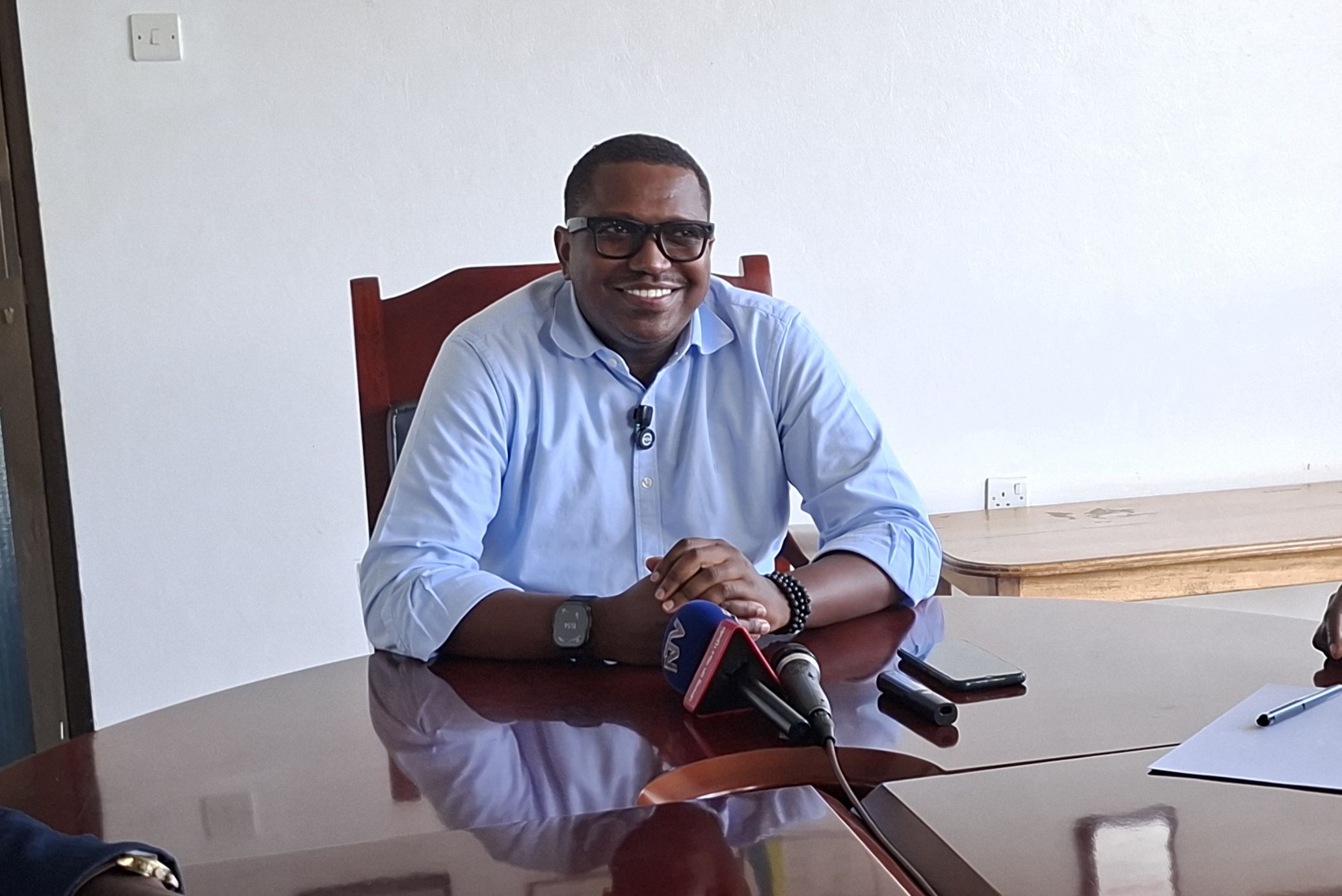
Entebbe Municipality Mayor Fabrice Rulinda, has said he is going to appeal the High Court’s Commercial Division judgement after it dismissed his case against Stanbic Bank Uganda, which he accused of breaching it’s banking contract by reversing funds and freezing his account without his consent or a court order.
On Monday, Justice Stephen Mubiru ruled that the bank acted within the law and dismissed the businessman’s claim with costs, after court found that a suspicious transfer of $73,262.50 (over Shs270 million) to the bank account of Rulinda could have been part of a financial arrangement linked to the M23 rebel group operating in eastern Democratic Republic of Congo.
However, Mr Rulinda has revealed that he is set appeal against the judgement in the case that has been before the courts of law since 2017.
“I was a client of Stanbic Bank in 2017, I had a transaction, and they took the money. We are asking them, was that done properly?…… Today, what we are fighting against is, this opens up a precedent for this to happen to anybody. That a bank can decide and becomes the court, it can say this money came from witchcraft, this one here came from a bribe, this came from corruption” he said.
He added, “If Stanbic Bank really felt there was anything criminal that was done, they were not the courts to decide. They should have gone to court or they should have asked whoever it is to go to court and the court decides on this matter. The whole M23, mayor of Entebbe, it’s now become the thing, I was Fabrice Rulinda their client, I was not mayor of Entebbe in 2017”.
Mr Rulinda made the remarks while addressing media alongside his lawyers Mr Isaac Ssali Mugerwa and Mr Samuel Taremwa of Bluebell legal advocates at the Entebbe Municipal Council offices on Tuesday.
“The facts are that they broke the law, if they broke the law, how do we handle it, if we leave it this way and say fine, I have been dealt a bad blow, what happens to the next person, this now becomes an avenue, an open street. We’ve given a blank check for anybody to do what they want with their institutions without regarding their fiduciary duties” he said.
Mr Rulinda has said by the bank stating that the money was linked to the M23 rebels it’s simply driving a narrative to accept responsibility for freezing his account in 2017.
“If the bank honestly, without prejudice, thought there was something wrong or the source of this money, what they could have done is they could have frozen that money, given it to the Central Bank and said when these things are sorted, the courts will determine who we give the money too” he said.
He added, “What they did, they decided who they want to give the money to, afterwards what they’re doing is they’re playing now on the sensationalism, on the emotions of a mayor of Entebbe, M23. You realize that there is no longer discussion on the substances of the case. We have gone into the mayor and this”.
Mr Rulinda furrher denied doing business with the M23 rebel group.
“That was not the bank’s place to answer, to determine. They could have gone if they honestly believed that there was an M23 involvement. Is it now the banks that determine that? That’s why we have courts,……. There are institutions that could have pursued me on that matter, if honestly that was the case” he said.
Mr Taremwa, one of Mr Rulinda’s lawyers said they have formulated grounds to appeal and will notify court of their intentions in a few days time.
“The bank debited his account and transferred the money back to the people who had credited him in that transaction. In 2017, we did not have, as far as I can recollect myself, we did not have M23 rebels in the DRC, my client is not involved at all with the M23 rebels. This matter was in respect to the accounts” he said.
Mr Taremwa said at the time the bank had raised concerns in respect to the transactions, based on a complaint from the third party that had credited the funds and the funds were eventually frozen on the account.
Mr Taremwa however noted that during investigations, the bank decided to debit and give the money back to the complainant.
“This is where we have a challenge with the judgment. Our client is aggrieved in the sense that he lost money, the court has decided that the bank did wrong to debit his account without a court order. But the court has not meted out any consequence to the bank for what it did. What this means, if we do not appeal against such a decision, it means that anybody would lose money in a bank and the bank would have the right to claim that the money was a result of proceeds of crime” he said.
According to court documents, the disputed funds were part of two transfers sent by a company identified as Green Global Corporation, which deposited more than $496,000 into Mr Rulinda’s dollar account within two days in August 2017.
The bank flagged the transactions as suspicious because the account had previously handled relatively small amounts. Shortly after the deposits, Mr Rulinda reportedly withdrew large sums of money, including more than $155,000 in cash, and used part of the funds for travel purchases and school fees.
According to court records, Rulinda admitted during investigations that he facilitated meetings between foreign gold buyers and individuals associated with the M23 rebel movement, an armed group sanctioned by the United Nations for destabilising eastern Congo.