By Bbosa Edward Benjamin
These are my reflections on the recently concluded LC1 elections in Uganda. I write as a Ugandan committed to democratic governance, the rule of law and respect for human dignity.
While I am actively engaged in politics, my reflections are guided by the conviction that the credibility of any election should be measured not by who wins or loses, but by whether the process genuinely reflects the will of the people.
What is the purpose of an election if it no longer reflects the will of the people?
That question has occupied my mind since the conclusion of Uganda’s recent LC1 elections.
For decades, we have been taught that elections are the cornerstone of democracy. We have been reminded that sovereignty belongs to the people and that leaders derive their legitimacy from the freely expressed will of the electorate. Yet democracy is not sustained by the mere holding of elections. It is sustained by public confidence that elections genuinely reflect the people’s choice.
When citizens raise concerns about the voting process, when the counting of votes is disrupted, and when security interventions occur during critical moments of an election, confidence in the outcome can be shaken. Democracy depends not only on the announcement of a winner but also on public’s belief that the process was far and worthy of trust.
The recent LC1 elections should have been a celebration of grassroot democracy. many communities they were peaceful and orderly, yet in other places, events raised difficult questions that deserve national reflection rather than dismissal.
Across several polling stations, concerns emerged about the integrity of the process. Allegations of people voting in the names of registered voters, questions surrounding voter location slips, disruptions during the counting process, and security interventions at critical moments all contributed to public anxiety. Whether isolate or widespread, such concerns deserve impartial scrutiny because democracy relies not only on outcomes, but also on confidence in the process itself.
These concerns should never be viewed through the lens of political victory or political defeat. Democracy belongs to every citizen. Today’s beneficiary of a flawed process could become tomorrow’s victim of the same process.….
Electoral justice is not about who wins. It is about whether every citizen believes that the process respected the sovereign will of the people.
The danger facing our country is not simply the possibility of irregularities in one election. The greatest danger is the gradual normalization of practices that weaken public confidence. Democracies rarely collapse overnight, more often they are weakened little by little, until citizens stop believing that participation can bring meaningful change.
Grassroot elections matter because they are where democracy is first experienced. The village is where citizens learn whether leadership is earned through public trust or merely announced through a process they no longer believe in.
If confidence is lost at this level, the consequences extend far beyond village leadership. They affect the legitimacy of every institution built upon the people’s consent.
The greatest threat to democracy is not always the absence of elections. It is the moment citizens begin to doubt that their vote truly matters.
As citizens, we have a collective responsibility to demand electoral processes that are transparent, peaceful, accountable and worthy of public trust.
Constructive criticism should never be mistaken for hostility towards our country. Nations become stronger when they are willing to confront uncomfortable truths and improve their institutions.
Democracy does not begin in parliament or The State House, but in our villages. If we fail to protect it there, we weaken it everywhere.
Uganda deserves elections whose legitimacy is beyond question. Our democracy deserves institutions that inspire confidence rather than suspicion. Most importantly, every citizen deserves
the assurance that their participati0on is meaningful and that their voice carries equal weight.
History will not judge us by how many elections we held. It will judge us by whether those elections genuinely reflected the will of the people.
The question before us is therefore greater than the outcome of any single election.
Are elections still a pathway to democracy, or are we slowly accepting a process that risks losing sight of the very principles democracy was created to protect?
The answer to that question will shape not only the future of our elections but also the future of our Republic.
Because democracy is not measured by the number of elections we hold, but by the trust people place in them.
Disclaimer: This article is not an attack on any individual, institution or political organization. Political fortunes rise and fall, Governments change, Political movements evolve. But the principle of democracy must remain constant.
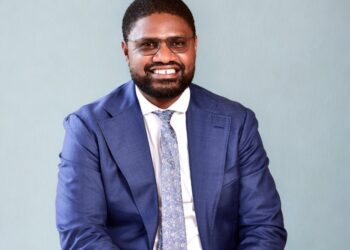
Bbosa Edward Benjamin is a Human Rights Defender and Governance Advocate.