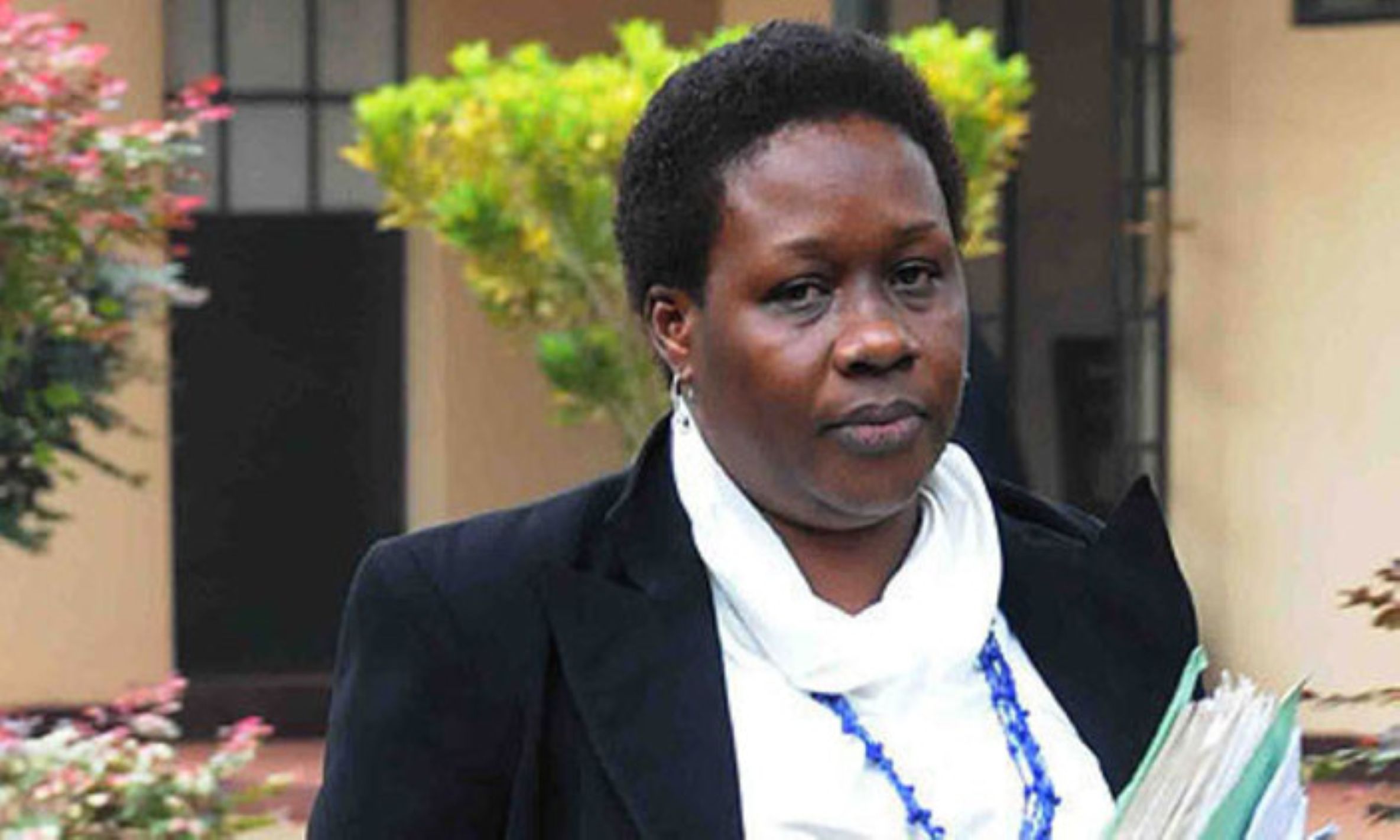
The International Crimes Division of the High Court has dropped terrorism charges against suspects in the murder of the Late Joan Kagezi, Assistant Director of Public Prosecutions, after court found that prosecution has not produced sufficient evidence to prove that the killing was carried out with the intention of influencing the government or a section of the public, as required to sustain the charge of terrorism.
On Friday, four justices including Hon Justice Dr Bashaija Andrew, Hon Justice Duncan Gaswaga, Hon Lady Justice Joyce Kavuma and Hon Justice Richard Wejuli Wabwire, ruled that prosecution failed to prove that Kisekka Daniel Kiwanuka, kibuuka John, Massajjage John aka Mubiru Brian aka Badru aka Chongo and Nasur Abdalla Mugonole committed terrorism in the murder of kagezi, which occurred on March 30, 2015.
In its ruling, the Court specifically found that the prosecution had adduced sufficient evidence to establish a case requiring all the accused persons, Kibuuka John, Massajjage John, and Nasur Abdallah Mugonole, to defend themselves in respect of the charge of murder.
The Court further found that the evidence presented sufficiently established that Joan Kagezi was unlawfully killed and that the attack was carried out for economic gain.
The Court also observed that the evidence was to the effect that the accused shot indiscriminately, demonstrating disregard for the safety of members of the public.
However, the Court found that the prosecution had not adduced sufficient evidence to prove that the killing was committed with the intention of influencing the government or a section of the public, as required to sustain the charge of terrorism.
Accordingly, the accused persons were acquitted on this charge (Terrorism).
The court however noted that the ruling is not a determination of guilt of the accused but rather signifies that the Court has found sufficient evidence to require the accused persons to present their defences on the charge of murder.
The trial will now proceed to the defence hearing, which will take place from July 13-17, 2026, after which the Court will make a final judgment.