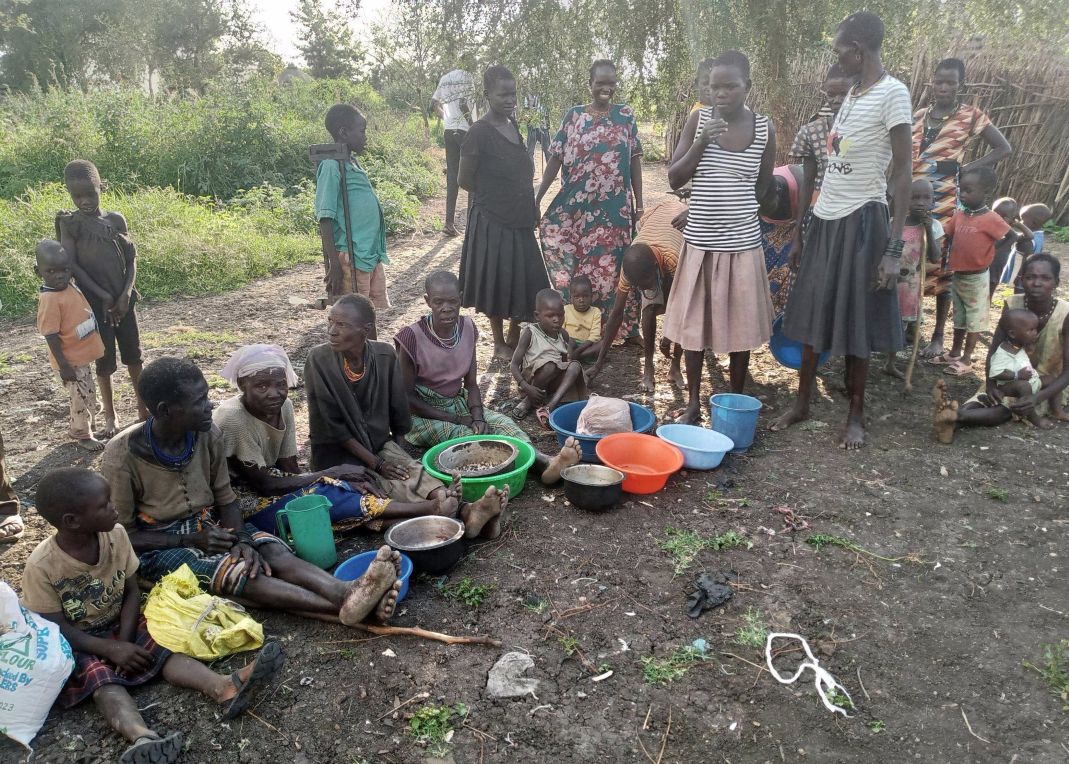
Food rights activists have called on the government to activate an emergency food relief program for all drought-affected districts immediately, in order to curb on the number of people dying from hunger in the karamoja sub region.
The Executive Director of the Food Rights Alliance (FRA), Ms Agnes Kirabo, made the appeal while noting that releasing contingency funds to district disaster management committees will enable rapid local response, in the region where currently, families coping mechanisms are not dignifying and reliable to save the situation.
“At least 18 people have been reported dead from hunger in Kotido since June, as a prolonged dry spell devastates the region. The drought began in March, immediately after what was thought to be the onset of the rainy season” she said.
She added, “Today, over five thousand hectares of crops worth 200 billion shillings have been destroyed. Families now survive on beer remnants locally known as “Adakai,” and children who should be in school have turned to mining for gold and quarrying sites to earn money for food”.
Ms Kirabo noted that in 2025, the Integrated Food Security Phase Classification (IPC) Acute Food Insecurity (AFI) analysis Report noted that up to 30 percent of people in Karamoja faced high levels of acute food insecurity between April and July 2025 and 20 percent of people in the region were expected to be in a food crisis by February 2026.
However, she alleged that government’s inaction amidst drought forecasts even beyond the Karamoja region has led to the current crisis.
According to Ms Kirabo, the Karamoja hunger crisis is not primarily a climate crisis but rather a governance crisis, with little political will to strategically invest in a full-blown water infrastructure to boost production in the region.
“The region has adequate rainfall and water route from Masaba and Sebei regions to achieve food self-sufficiency…… We have repeatedly called on the Office of the Prime Minister (OPM) to prioritize early warning signs of drought and hunger and set aside plans and resources for timely responses” she said.

However, Ms Kirabo revealed that the timely release of food aid remains a challenge, “As such, what Karamoja lacks is accountable governance that treats the right to food as non-negotiable.”
The activists have further recommended the government to also operationalize early warning systems so that meteorological forecasts trigger automatic, pre-funded response mechanisms.
“The State of Parish Economic Affairs ( SPEAR) reports from parishes could provide timely data on food security, invest in water infrastructure in Karamoja as a strategic sustainable approach to addressing hunger challenges of the region” she said.
Ms Kirabo further called on government to expedite the approval of the revised Food and Nutrition policy 2003 and enactment of the National Food and Nutrition Bill to strengthen the country’s food governance architecture.
“Regulate agricultural inputs to protect farmers from counterfeit seeds and fertilizers that undermine crop production, strengthen local food systems by fully resourcing the “Karamoja Feeds Karamoja” initiative and shift from aid to local food procurement” she said.
Ms Kirabo also urged government to address root causes of chronic poverty through long-term investment in education, health, infrastructure, and economic diversification.