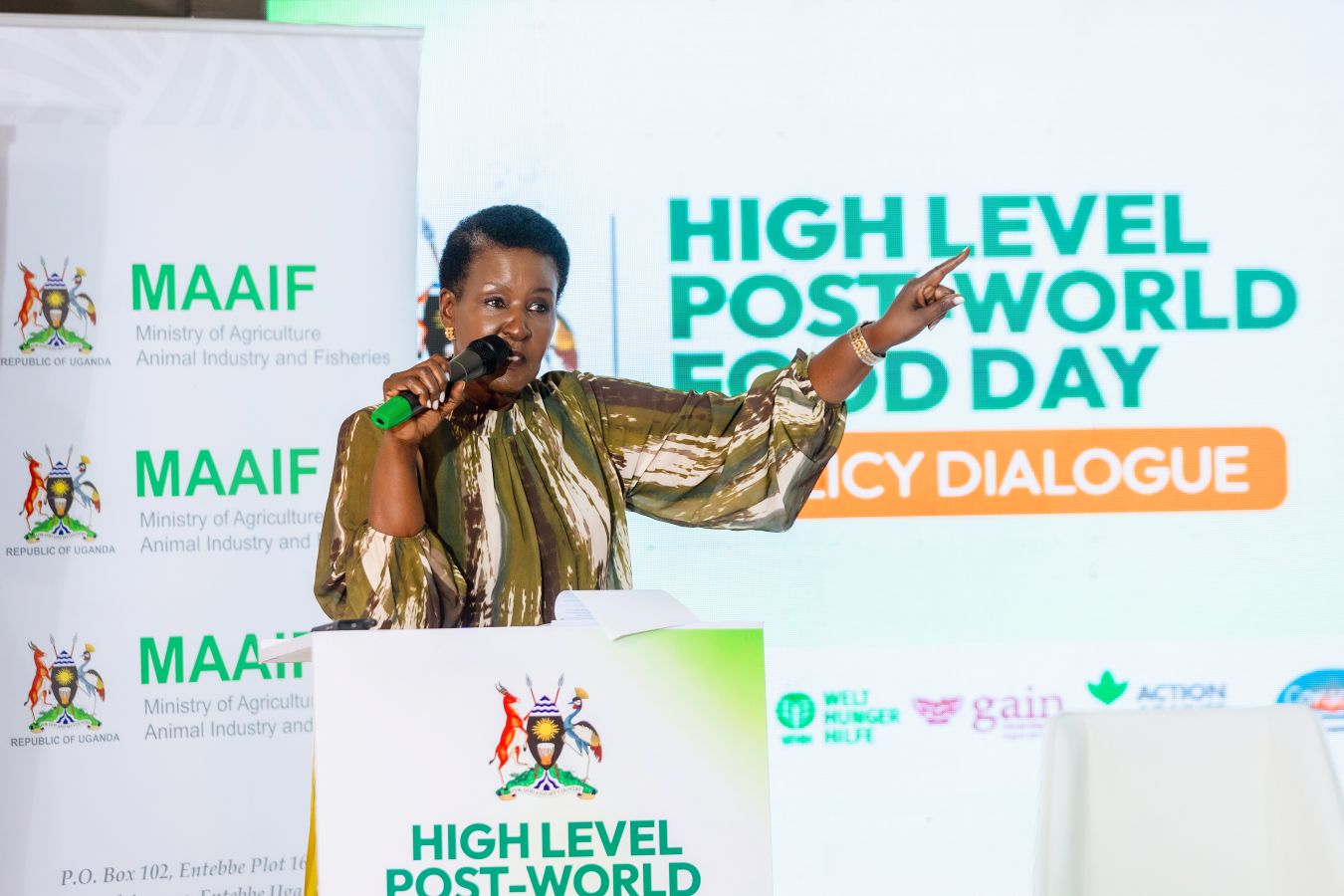
The Chairperson of the Parliamentary Committe on Agriculture, Animal Industry and Fisheries in Parliament, Hon Amelia Anne Kyambadde has called for a mindset change amongst farmers and Ugandan’s in general, in order to combat malnutrition and rising hunger levels across the country.
“The issue here is mindset change, it is very important for our people in the villages, the have to know about the soils why they have to grow specific foods for nutrition” she said
She added, ‘I remember at one time, I gave out seedlings in my area when I had just come into politics. My people told me, why is she giving us beans, we want meat, so that’s the mindset”.
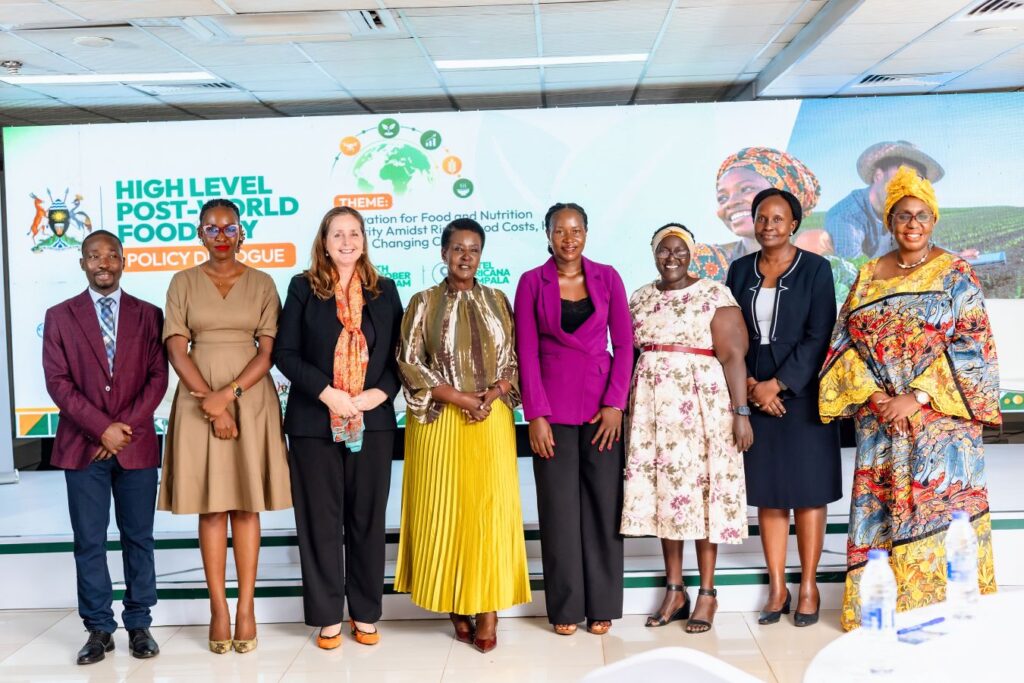
Hon Kyambadde made the remarks during the High-level post-world food day policy dialogue, themed “innovation for food and nutrition security amid rising food costs, hunger, and a changing climate”, held at Hotel African in Kampala on Thursday.
Ms Kyambadde noted that mind-set change will enable farmers plan wisely on the foods to grow to sustain them both domestically and economically.
“We, the fighters of malnutrition, agriculture should be together with water, should be together with health and intergovernmental agencies working with NGO’s, create synergies, each one is working in isolation, but it’s time now to create synergies” she said.
She further called for the identification of the vulnerable farmers in rural areas and support them with inputs, guidance among other things to enhance their production.
“If we come here and sit in boardrooms and we think we are going to find solutions, no let’s go down there. Let’s go down to the grassroots and find out what the challenges are” said.
She further asked the nutritionists to identify the soils in which they have to grow specific foods, calling for synergy between Agriculturalists, Civil society organisations and the government, in order to improve nutrition and curb hunger in the country.
“Then you have issues like water which is key, issues like education. Once people are educated, they will know what type of food to eat, to grow, get to know when and how and they will follow the seasons in which to plant in those foods” she said.
The Executive Director Food Rights Alliance (FRA), Ms Agnes kirabo, said a number of crises facing the country including rising food and fuel prices, climate crisis and foreign exchange crisis have led to increased malnutrition in the country.
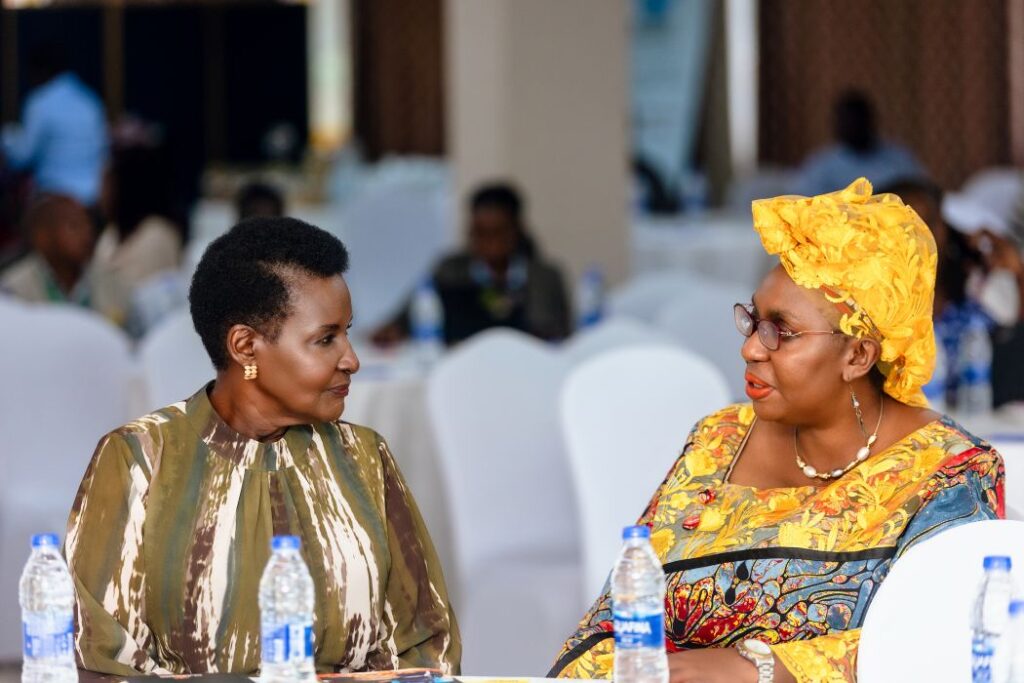
“The foreign exchange crisis and all these crises have actually reached the plate, they have reached a pupil who is sitting for exams without food at school, a university student, youth entrepreneur, and a mother in the village” she said.
She added, “Food is becoming very scarce, unaffordable. The basic food in a crisis is posho and beans by Ugandan standards, but now it is now the food of the rich. A kilogramme of beans is between Ugx 7,000 and UGX 8,000, posho is around 4,000”.

Ms Kirabo said there is need for innovations to combat the current food crisis in the country, with food commodities facing skyrocketing prices.
“There is no small innovation in a crisis, every innovation matters. We need to collect actions that we can take as individuals, groups, communities, organisations and the country. It’s a critical moment in time because government is going to make budget decisions. We need to put our money where it is going to impact and liberate people from this crisis, especially the food crisis” she said.
Ms Kirabo further warned unscrupulous individuals looking at defrauding Ugandans, by adulterating foods.
“We are not talking to you criminals, people who are adulterating our food and we are actually calling on the security organs, the act of adulterating food is an act of terrorism because you can wipe out the entire population in Uganda” she said.
The assistant commissioner information and communication at the Ministry of Agriculture, Animal Industry and Fisheries (MAAIF), Ms Consolata Acayo, said there is a need to ensure innovations reach the last farmer to curb malnutrition.
“How can we, people in the agriculture sector, who are supposed to provide food for these people, the country, for the nation, for the region, ensure that people are able to get the food they need, people are able to have access to the available food, people are able to afford even the food that is there” she said.
Ms Acayo said there is need to identify solutions to the issues affecting the food chain cycle, calling for more cooperation between actors.
“Agriculture is not for one person, if we check carefully here, we are from very many and all different MDA’s are here, the private sector. Agriculture is not for the ministry, it’s for everybody so can we hold hands to make sure that this agriculture matters?” she said.
The Chairperson of the Board of Directors FRA, Ms Pamela Ebanyat called for a collective action to combat the complexity of today’s food and nutrition challenges.
“Food insecurity and malnutrition remain significant concerns, despite our country’s enormous agricultural potential, too many households continue to struggle to access adequate and nutritious food” she said.
She added, “There are rising levels of vulnerability among the children, the women, low-income households, and they remind us that production alone does not automatically translate into food and nutrition security”.
Ms Ebanyat noted that the rising cost of living in the country has led to a difficulty in accessing a nutritious diet for many low income earning families especially young people, low-income earners, and vulnerable populations.
The UNICEF Chief of nutrition in Uganda, Mr. Zakaria Fusheini, noted that climate change and rising food costs has put more children in particular into vulnerability of malnutrition.
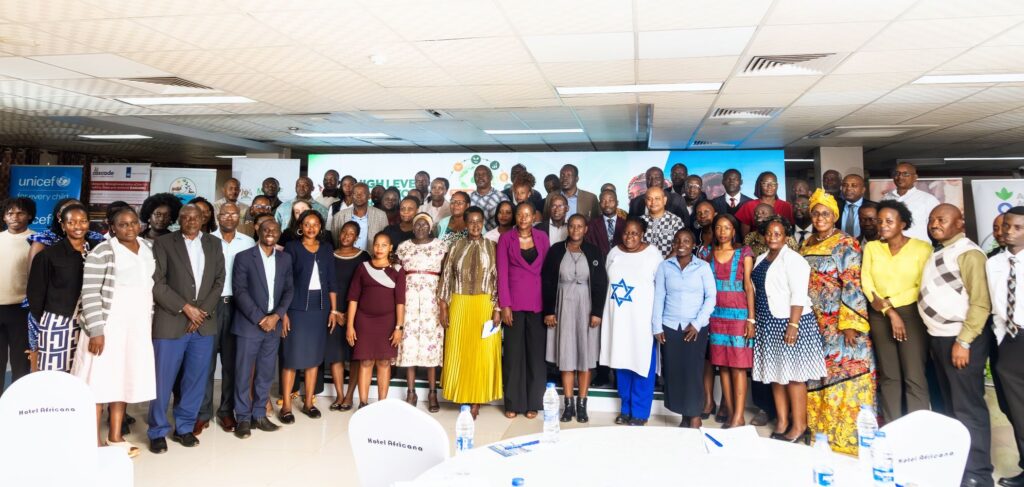
“Currently what is important is for the government partners to ensure that malnutrition is highly eradicated in the country and then also ensure that children diet are protected, services are protected to children and women and then also ensuring that we have access and availability of food that can make a difference in the life of a child” he said.
The country Director WeltHungerHilfe, Ms. Jeannette Wijnants reiterated the need for innovations to have a purpose, by reaching the person at the last mile.
“Welthungerhilfe together with Palm Corps, a few years ago developed an application called ‘I Know Farm’, we were targeting refugees and host communities in West Nile settlements but also now in Karamoja, where we have reached more than 70,000 people” she said.
She added, “It’s running as a social enterprise at the moment, where through the phone application, people can get information on anything related to agriculture, but also nutrition, empowering households to look and check for their children’s nutritional status and bringing people to markets”.
Ms Wijnants, urged for inclusive innovations to ensure that all people equally participate in the fight to curb malnutrition.